

Many businesses invest significant time and money into driving traffic to their websites. Whether through SEO, paid advertising, or social media, attracting visitors is often seen as the hardest part of online growth.
But what many companies don’t realize is that a large percentage of those visitors never convert into leads.
In fact, most websites lose a substantial number of potential customers before they ever complete a form, request a quote, or make a purchase. Understanding why this happens is the first step toward fixing it.
In this article, we’ll explore why websites lose leads and what businesses can do to recover them.
1. Visitors Leave Before Completing Forms
One of the biggest sources of lost leads is abandoned contact forms.
Many visitors begin filling out a form but never finish it. This can happen for several reasons:
- forms that are too long
- unclear questions or instructions
- distractions while browsing
- hesitation about sharing personal information
When a visitor leaves before submitting the form, the lead is often lost completely. Without tracking tools, businesses usually never even know the visitor started the process.
2. Your Forms Ask for Too Much Information
Long or complicated forms create friction.
Visitors generally prefer quick and simple interactions. If your form requires too many fields—such as phone numbers, company details, budgets, or multiple custom questions—users may abandon the process halfway through.
How to fix it:
- Keep forms short and focused
- Only ask for essential information
- Break longer forms into steps if necessary
Reducing friction makes it easier for visitors to convert.
3. Slow Website Performance
Page speed plays a major role in user behavior. If a page loads slowly or feels unresponsive, visitors may leave before interacting with your content or forms.
Research consistently shows that slower websites lead to higher abandonment rates.
How to fix it:
- Optimize images and scripts
- use reliable hosting
- minimize unnecessary plugins or scripts
A faster website improves both user experience and conversion rates.
4. Visitors Get Distracted
Many website visitors browse while multitasking. Notifications, phone calls, emails, or simply switching tabs can interrupt the process of filling out a form or completing a checkout.
Once distracted, visitors often forget to return.
This means businesses lose potential leads even when users were already interested.
5. Lack of Follow-Up Opportunities
Traditional contact forms only capture data when the form is successfully submitted. If a visitor abandons the form halfway through, all entered information is lost.
This creates a blind spot for many businesses. They never see the leads that almost converted.
How to fix it:
Use tools that track form activity and detect abandoned submissions. By capturing partial form entries, businesses can better understand where visitors drop off and create strategies to recover those leads.
6. Lack of Insights Into User Behavior
Without proper analytics, it can be difficult to understand where your conversion funnel is failing.
Questions businesses often struggle to answer include:
- Where do visitors drop off?
- Which campaigns generate leads?
- How many users abandon forms or checkouts?
Having visibility into these metrics is essential for improving lead generation.
How to Recover Lost Leads
Recovering lost leads requires both better form design and better tracking.
Some effective strategies include:
Simplifying forms
Shorter forms increase completion rates.
Improving page speed
Fast websites keep visitors engaged.
Tracking abandonment
Understanding where visitors drop off reveals opportunities for improvement.
Following up with potential leads
When possible, automated reminders can encourage visitors to return and complete their submission.
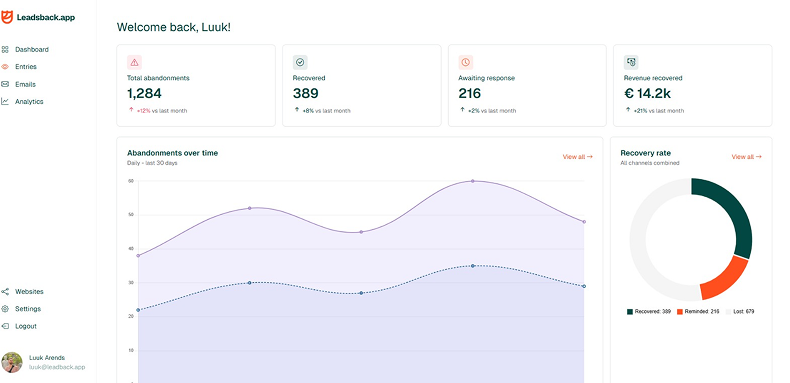
Platforms like Leadsback help businesses track abandoned forms and checkouts, making it possible to identify lost opportunities and recover potential customers before they disappear.
Turning Lost Visitors Into Leads
Most websites lose more leads than they realize. Visitors who start filling out forms or begin a checkout process are already interested—but many never complete the final step.
By identifying the reasons behind abandonment and implementing the right recovery strategies, businesses can significantly increase their conversion rates.
Even recovering a small percentage of lost leads can result in substantial revenue growth over time.